 NEET Notes
Home > Biology > Zoology > Chemical Coordination and Integration
Chemical Coordination and Integration
On this page · 16 sections
- 01Syllabus map
- 02Endocrine glands and hormones
- 03Hypothalamus
- 04Pituitary gland: the master gland
- 05Pineal gland
- 06Thyroid and parathyroid glands
- 07Thymus and adrenal glands
- 08Pancreas: insulin and glucagon
- 09Gonads: testis and ovary
- 10Hormones of heart, kidney and gut
- 11Mechanism of hormone action
- 12Table 1 - Endocrine glands, hormones and functions
- 13Table 2 - Pituitary hormones at a glance
- 14Table 3 - Disorders: too little or too much hormone
- 15Table 4 - Adrenal cortex vs medulla
- 16Ladder - Hormones that confuse
Endocrine glands, every hormone NCERT names, and how hormones act, with the disorders NEET asks.
Syllabus map
- NMC Unit: BIO-U05, Human Physiology. NCERT Chapter 19, Chemical Coordination and Integration.
- Subtopics in this chapter (NCERT XI, Ch 19): 19.1 Endocrine glands and hormones. 19.2 Human endocrine system: hypothalamus, pituitary, pineal, thyroid, parathyroid, thymus, adrenal, pancreas, testis and ovary. 19.3 Hormones of heart, kidney and gastrointestinal tract. 19.4 Mechanism of hormone action.
- Subtopic checklist: (1) endocrine vs exocrine glands and what a hormone is; (2) hypothalamus and the pituitary; (3) pineal gland and melatonin; (4) thyroid, parathyroid and calcium balance; (5) thymus and adrenal glands; (6) pancreas, insulin and glucagon; (7) testis and ovary; (8) heart, kidney and gut hormones; (9) how hormones act on target cells.
- Extra information (beyond NCERT), labelled where it appears: the pituitary as the master gland; myxoedema as the adult form of hypothyroidism; tyrosine as the starting material for adrenaline and noradrenaline; epiphyseal plates in the growth-hormone confusion row; the action of ANF on the renal tubules. Everything else is from NCERT XI, Ch 19.
- Estimated revision time: 10 minutes. Jump links: Syllabus Map, Endocrine Glands, Hypothalamus, Pituitary, Pineal, Thyroid, Thymus and Adrenal, Pancreas, Gonads, Heart Kidney Gut, Mechanism, Trap Boxes, PYQs, Chapter Test.
Endocrine glands and hormones
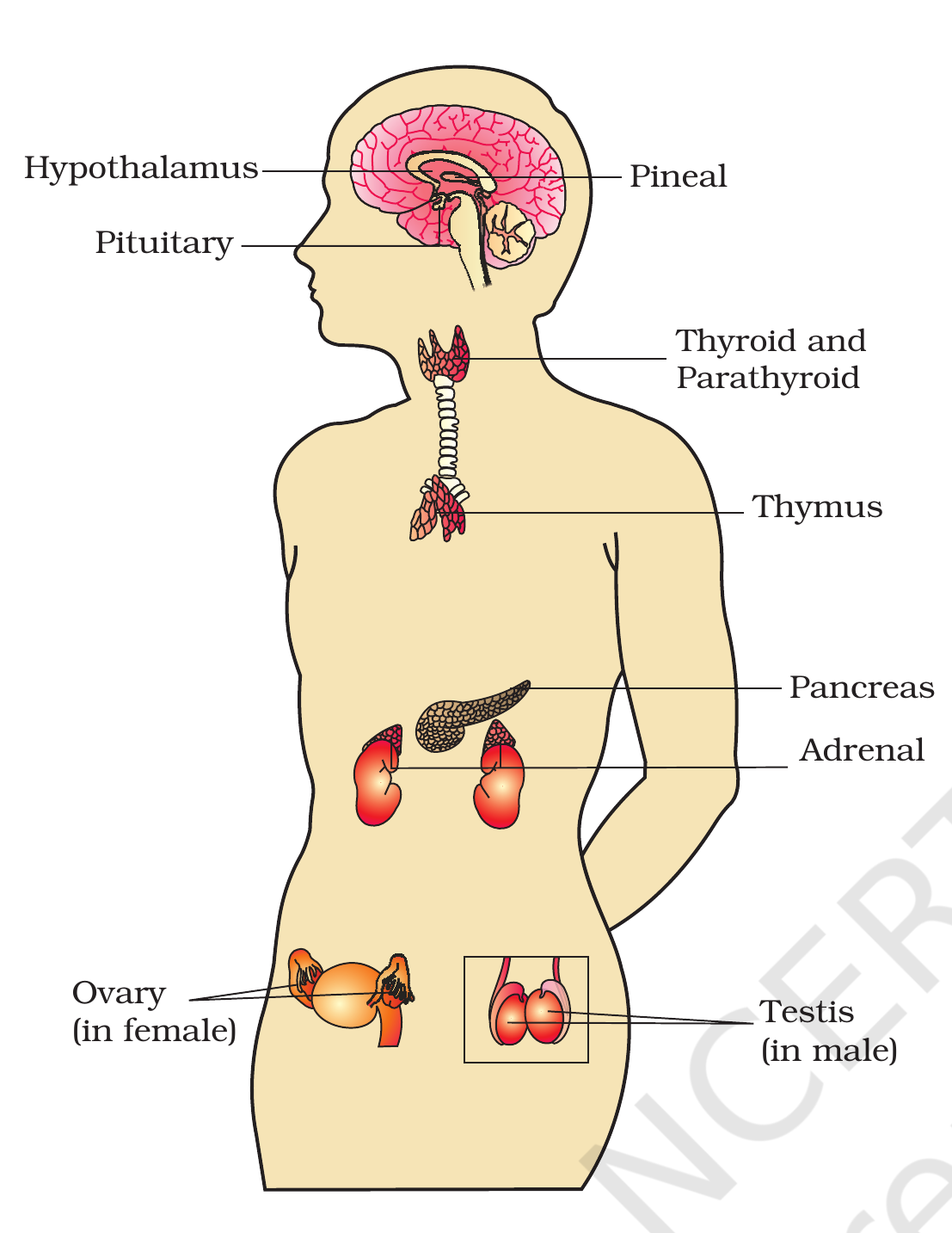
Coordination in the body is done by two systems working together: the neural system and the endocrine system. The neural system provides a point-to-point, fast connection, but its effect is short-lived. The endocrine system sends chemical signals through the blood, so its effect is slower but longer lasting. Together they form the neuroendocrine system, and the hypothalamus is the link between the two.
Endocrine glands are ductless glands: they pour their secretions directly into the blood. Exocrine glands release their secretions through ducts, for example salivary glands and sweat glands.
A hormone is a non-nutrient chemical that acts as an intercellular messenger. Hormones are produced in trace amounts, are carried by the blood to a target tissue, and act only on cells that have specific receptors for them. The same hormone can have different effects on different target tissues.
- Endocrine glands in the body: hypothalamus, pituitary, pineal, thyroid, parathyroid, thymus, adrenal, pancreas, testis and ovary.
- Organs that also secrete hormones: heart, kidney and gastrointestinal tract.
- The hypothalamus controls the pituitary gland, and the pituitary controls most other endocrine glands. Extra information (beyond NCERT): this is why the pituitary is often called the master gland.
Practice1 question
Try it now. A wrong answer costs nothing here, try again until you get it.
Which of the following is an endocrine gland?
Endocrine glands are ductless: they release hormones directly into the blood. The pituitary is endocrine. Salivary glands and sweat glands are exocrine: they release secretions through ducts.
Hypothalamus
The hypothalamus is the basal part of the diencephalon (forebrain). It regulates a wide range of body functions and links the neural system with the endocrine system.
The hypothalamus controls the pituitary gland through two kinds of hormones:
- Releasing hormones: they stimulate the anterior pituitary to secrete its hormones. Example: GnRH (gonadotrophin releasing hormone) stimulates the release of LH and FSH.
- Inhibiting hormones: they stop the anterior pituitary from secreting its hormones.
On the other hand, somatostatin from the hypothalamus inhibits the release of growth hormone from the pituitary.
The posterior pituitary does not make its own hormones. Oxytocin and vasopressin are synthesised in the hypothalamus, transported along the nerve fibres to the posterior pituitary, and stored and released from there. This is one of the most tested facts in this chapter.
Pituitary gland: the master gland
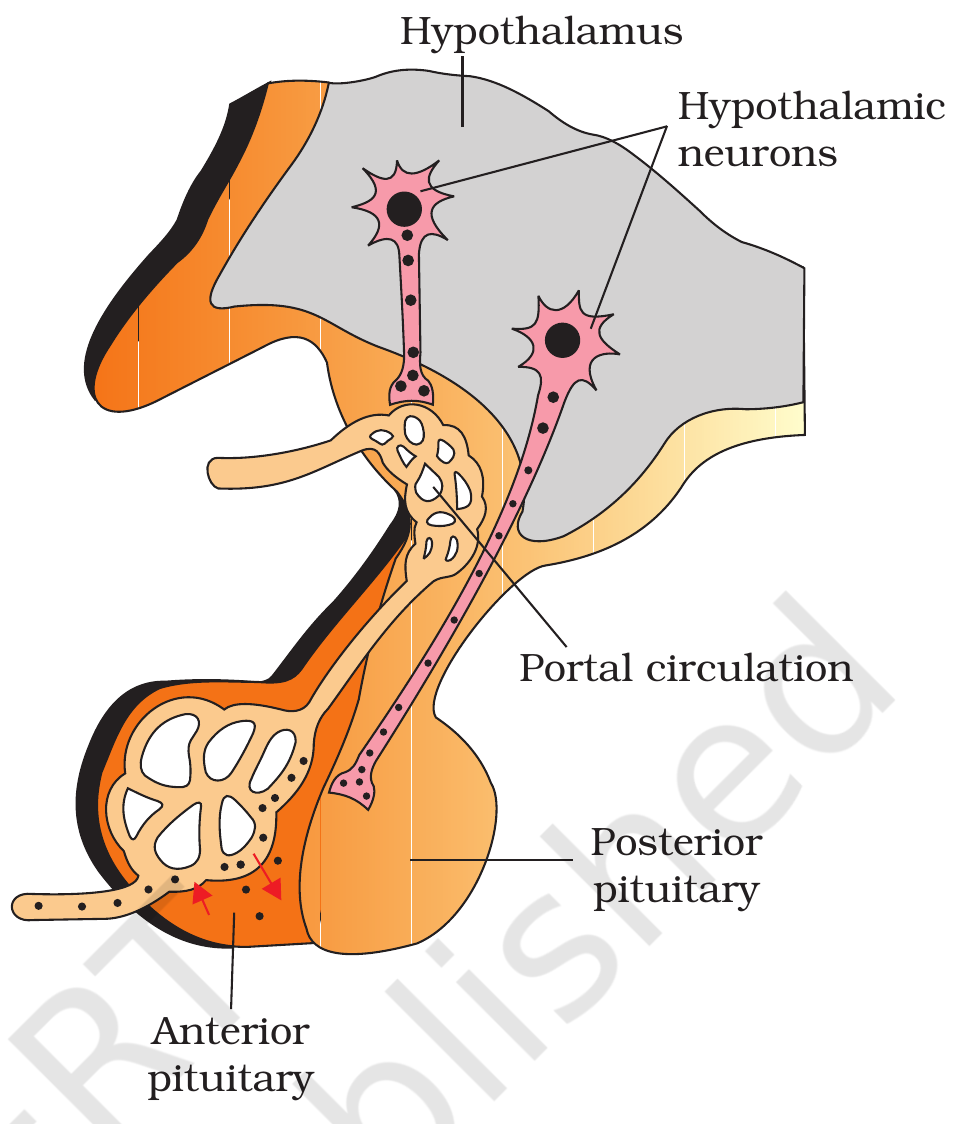
The pituitary gland is located in a bony cavity called sella tursica and is attached to the hypothalamus by a stalk. It is divided anatomically into the adenohypophysis and the neurohypophysis.
The adenohypophysis has two parts: the pars distalis (anterior pituitary) and the pars intermedia. The pars distalis produces six hormones:
- Growth hormone (GH or somatotropin): stimulates body growth. Over-secretion in children causes gigantism (abnormal height); over-secretion in adults causes acromegaly (enlarged bones of face, hands and feet). Low secretion in children causes dwarfism (stunted growth).
- Prolactin (PRL): regulates the growth of the mammary glands and the formation of milk.
- Thyroid stimulating hormone (TSH): stimulates the synthesis and secretion of thyroid hormones.
- Adrenocorticotrophic hormone (ACTH): stimulates the synthesis and secretion of steroid hormones (glucocorticoids) from the adrenal cortex.
- Luteinising hormone (LH): in males it stimulates the Leydig cells of the testis to secrete androgens; in females it induces ovulation and maintains the corpus luteum.
- Follicle stimulating hormone (FSH): in males it regulates spermatogenesis; in females it stimulates the growth and development of the ovarian follicles.
LH and FSH stimulate gonadal activity and hence are called gonadotrophins.
The pars intermedia secretes only one hormone, melanocyte stimulating hormone (MSH). MSH acts on the melanocytes and regulates the pigmentation of the skin. In humans the pars intermedia is almost merged with the pars distalis.
The neurohypophysis (pars nervosa, posterior pituitary) stores and releases two hormones made in the hypothalamus:
- Oxytocin: acts on the smooth muscles of the uterus and stimulates their contraction during childbirth. It also stimulates milk ejection from the mammary glands.
- Vasopressin (antidiuretic hormone, ADH): stimulates the reabsorption of water and electrolytes by the distal tubules of the nephron and thereby reduces the loss of water through urine (diuresis). Deficiency of ADH causes diabetes insipidus, with excessive loss of water in urine.
Practice1 question
Try it now. A wrong answer costs nothing here, try again until you get it.
Over-secretion of growth hormone in an adult causes:
Over-secretion of growth hormone in adults causes acromegaly: the bones of the face, hands and feet enlarge. In children the same over-secretion causes gigantism. Low secretion in children causes dwarfism.
Pineal gland
The pineal gland is located on the dorsal side of the forebrain. It secretes the hormone melatonin.
Melatonin plays a very important role in the regulation of a 24-hour (diurnal) rhythm of our body: the sleep-wake cycle, body temperature and metabolism. It also influences pigmentation, the menstrual cycle and our defence capability.
Thyroid and parathyroid glands
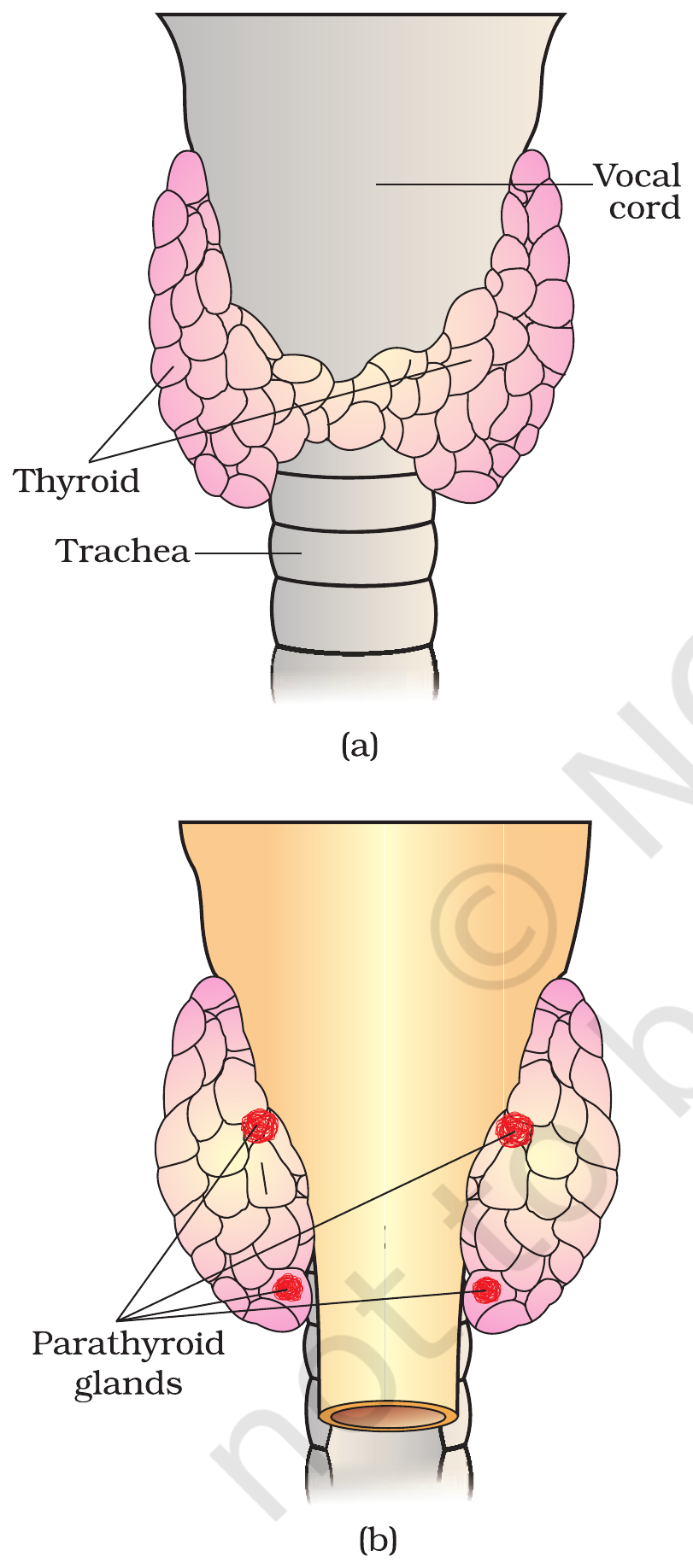
The thyroid gland is composed of two lobes located on either side of the trachea. Both the lobes are interconnected with a thin flap of connective tissue called isthmus. It is made of follicles and stromal tissues. Each thyroid follicle is composed of follicular cells enclosing a cavity.
The thyroid secretes two hormones:
- Thyroxine (tetraiodothyronine, T4) and triiodothyronine (T3): iodine is essential for their synthesis. They regulate the basal metabolic rate (BMR), support the process of red blood cell formation, control the metabolism of carbohydrates, proteins and fats, and help maintain water and electrolyte balance.
- Thyrocalcitonin (TCT): a protein hormone that regulates blood calcium levels.
Disorders of the thyroid:
- Hypothyroidism (inadequate hormone secretion): deficiency of iodine causes enlargement of the thyroid gland, called goitre. In children it causes cretinism: stunted growth, mental retardation, low intelligence quotient, abnormal skin and deaf-mutism. Extra information (beyond NCERT): in adults, hypothyroidism causes myxoedema. In adult women, hypothyroidism may cause menstrual cycle to become irregular. During pregnancy, hypothyroidism may cause defective development and maturation of the growing baby.
- Hyperthyroidism (excessive secretion): causes exophthalmic goitre, with an enlarged thyroid gland, protruding eyeballs, increased basal metabolic rate and weight loss. This is also called Graves disease.
The parathyroid glands are four small glands present on the back side of the thyroid gland, one pair in each of the two lobes. They secrete parathyroid hormone (PTH). PTH increases the calcium ion ($Ca^{2+}$) level in the blood: it stimulates bone resorption (dissolution of bone), reabsorption of $Ca^{2+}$ by the renal tubules, and absorption of $Ca^{2+}$ from the digested food. PTH is therefore a hypercalcemic hormone. Thyrocalcitonin (TCT) and PTH together regulate blood calcium: TCT lowers it, PTH raises it.
Practice1 question
Try it now. A wrong answer costs nothing here, try again until you get it.
Deficiency of iodine in the diet causes:
Iodine is essential for the synthesis of thyroxine (T4) and triiodothyronine (T3). Deficiency causes hypothyroidism and enlargement of the thyroid gland, called goitre.
Thymus and adrenal glands
The thymus gland is a lobular structure located between lungs behind sternum on the ventral side of aorta. It secretes thymosins, which play a major role in the differentiation of T-lymphocytes, which provide cell-mediated immunity. The thymus also promotes the production of antibodies to provide humoral immunity. It degenerates in old individuals, so the production of thymosins decreases.
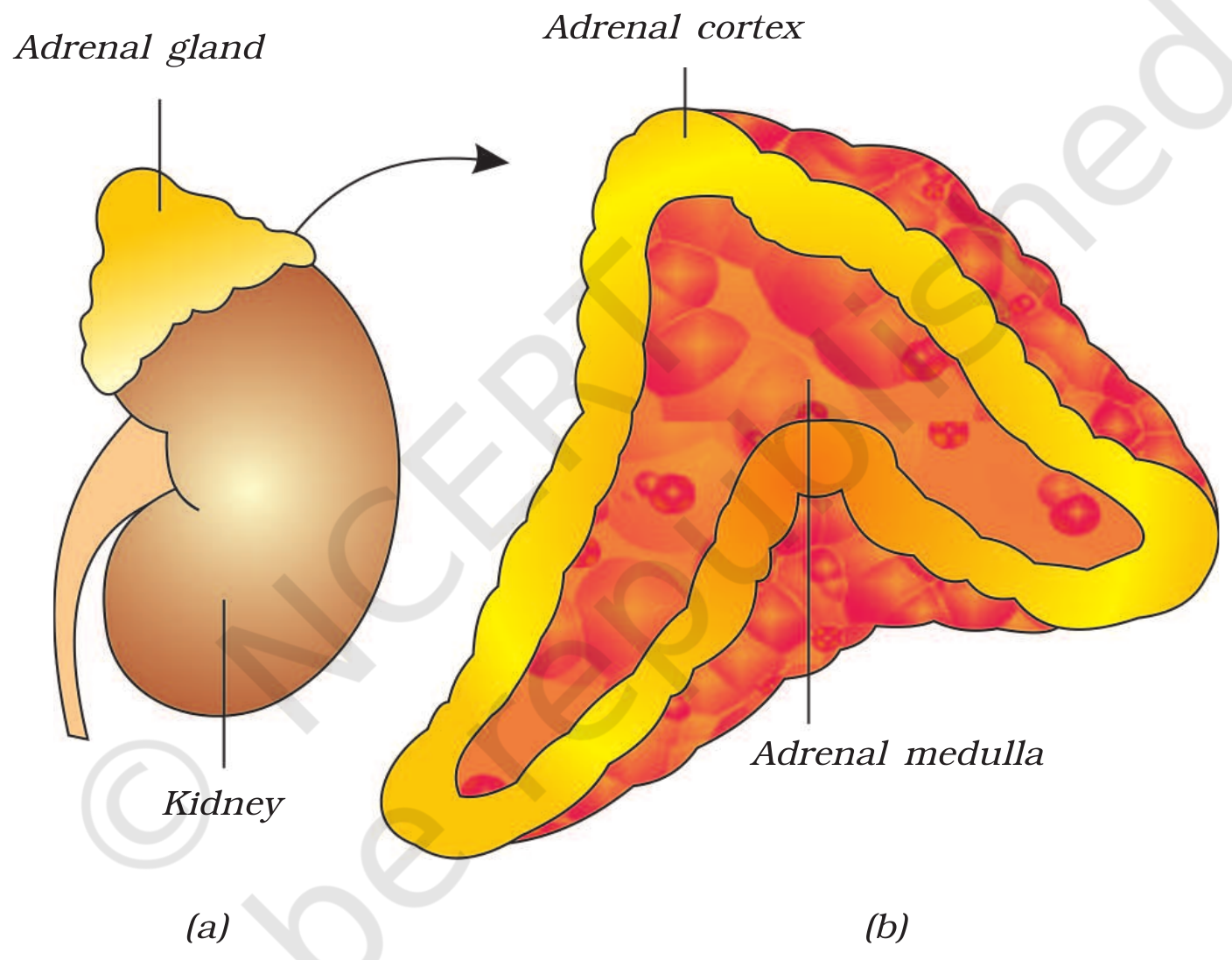
The adrenal glands are located on top of each kidney, one on each side. Each adrenal gland has two types of tissues: the outer adrenal cortex and the inner adrenal medulla.
The adrenal cortex can be divided into three layers, called zona reticularis (inner layer), zona fasciculata (middle layer) and zona glomerulosa (outer layer). It secretes three groups of steroid hormones:
- Glucocorticoids (mainly cortisol): involved in carbohydrate metabolism. Cortisol stimulates gluconeogenesis (formation of glucose from non-carbohydrate sources), lipolysis and proteolysis, and inhibits cellular uptake and utilisation of amino acids. It is also involved in maintaining the cardiovascular system and kidney functions. Cortisol produces anti-inflammatory reactions and suppresses the immune response.
- Mineralocorticoids (mainly aldosterone): act on the renal tubules and stimulate the reabsorption of sodium ions ($Na^+$) and water and the excretion of potassium ions ($K^+$) and phosphate ions. Aldosterone helps in the maintenance of electrolytes, body fluid volume, osmotic pressure and blood pressure.
- Small amounts of androgenic steroids are also secreted by the adrenal cortex; they play a role in the growth of axial hair, pubic hair and facial hair during puberty.
Underproduction of hormones by the adrenal cortex alters carbohydrate metabolism causing acute weakness and fatigue leading to a disease called Addison's disease.
The adrenal medulla secretes two hormones, adrenaline (epinephrine) and noradrenaline (norepinephrine). They are called the emergency hormones or hormones of fight or flight. They are rapidly secreted in response to stress of any kind and during emergency situations. They increase alertness, cause pupilary dilation, piloerection (raising of hair) and sweating, increase the heart beat, the strength of heart contraction and the rate of respiration, and stimulate the breakdown of glycogen, so blood glucose rises. Adrenaline and noradrenaline are amino acid derivatives. Extra information (beyond NCERT): they are made from the amino acid tyrosine.
Pancreas: insulin and glucagon
The pancreas is a composite gland: it acts as both an exocrine and an endocrine gland. The endocrine part is the islets of Langerhans: about 1 to 2 million islets, which represent only 1 to 2 percent of the pancreatic tissue. The exocrine part (acini) secretes digestive enzymes.
The islets of Langerhans have two main cell types:
- Alpha cells secrete glucagon, a peptide hormone. Glucagon is hyperglycemic: it stimulates glycogenolysis (breakdown of glycogen in the liver) and increases blood glucose.
- Beta cells secrete insulin, a peptide hormone. Insulin is hypoglycemic: it stimulates glycogenesis (conversion of glucose to glycogen in liver and muscle), enhances cellular glucose uptake and utilisation by hepatocytes and adipocytes, and reduces blood glucose. Insulin is therefore the main hormone that maintains normal blood glucose levels.
Glucagon and insulin work against each other and together maintain glucose homeostasis: when blood glucose rises, insulin brings it down; when it falls, glucagon brings it up.
Deficiency of insulin causes diabetes mellitus: blood glucose stays high (hyperglycemia), glucose is lost with urine (glycosuria), and ketone bodies are formed. This is different from diabetes insipidus, which is caused by ADH deficiency and is a loss of water, not glucose.
Practice1 question
Try it now. A wrong answer costs nothing here, try again until you get it.
Which hormone lowers blood glucose by stimulating glycogenesis?
Insulin lowers blood glucose by stimulating glycogenesis, the conversion of glucose to glycogen in the liver and muscle (NCERT 19.2.8). Glucagon and adrenaline both raise blood glucose by stimulating glycogenolysis, so neither of them can be the answer here.
Gonads: testis and ovary
The testis is the primary sex organ in males. It performs two functions: it produces sperms, and it secretes hormones. The Leydig cells (interstitial cells) of the testis secrete androgens, mainly testosterone.
Androgens regulate the development, maturation and functions of the male accessory sex organs, the appearance of the male secondary sexual characters (beard, moustache, deep voice, body hair, muscular body), spermatogenesis, and male sexual behaviour. Androgens also have anabolic effects on protein and carbohydrate metabolism.
The ovary is the primary sex organ in females. It produces ova and secretes two groups of steroid hormones:
- Estrogen (mainly estradiol): synthesised and secreted by the growing ovarian follicles. Estrogen stimulates the growth and activities of the female secondary sex organs, the development of the growing ovarian follicles, the appearance of female secondary sexual characters (high-pitched voice, development of breasts, female body hair pattern), and the mammary gland development.
- Progesterone: secreted by the corpus luteum. It supports pregnancy, acts on the mammary glands and stimulates the formation of alveoli (milk-secreting sacs) and the storage of milk.
Hormones of heart, kidney and gut
Some other organs also secrete hormones, even though they are not endocrine glands:
- Heart: the atrial wall secretes atrial natriuretic factor (ANF). ANF decreases blood pressure: it causes vasodilation (dilation of blood vessels). Extra information (beyond NCERT): ANF also inhibits the reabsorption of sodium and water by the renal tubules, so more sodium and water are lost in urine.
- Kidney: the juxtaglomerular cells secrete erythropoietin, which stimulates erythropoiesis, the formation of red blood cells.
- Gastrointestinal tract: four groups of cells secrete peptide hormones. Gastrin acts on the gastric glands and stimulates the secretion of hydrochloric acid and pepsinogen. Secretin acts on the exocrine pancreas and stimulates the secretion of water and bicarbonate ions. Cholecystokinin (CCK) acts on the pancreas and the gall bladder: it stimulates the secretion of pancreatic enzymes and the contraction of the gall bladder. Gastric inhibitory peptide (GIP) inhibits gastric secretion and motility.
Several other non-endocrine tissues secrete hormones called growth factors. These factors are essential for the normal growth of tissues and their repairing/regeneration.
Mechanism of hormone action
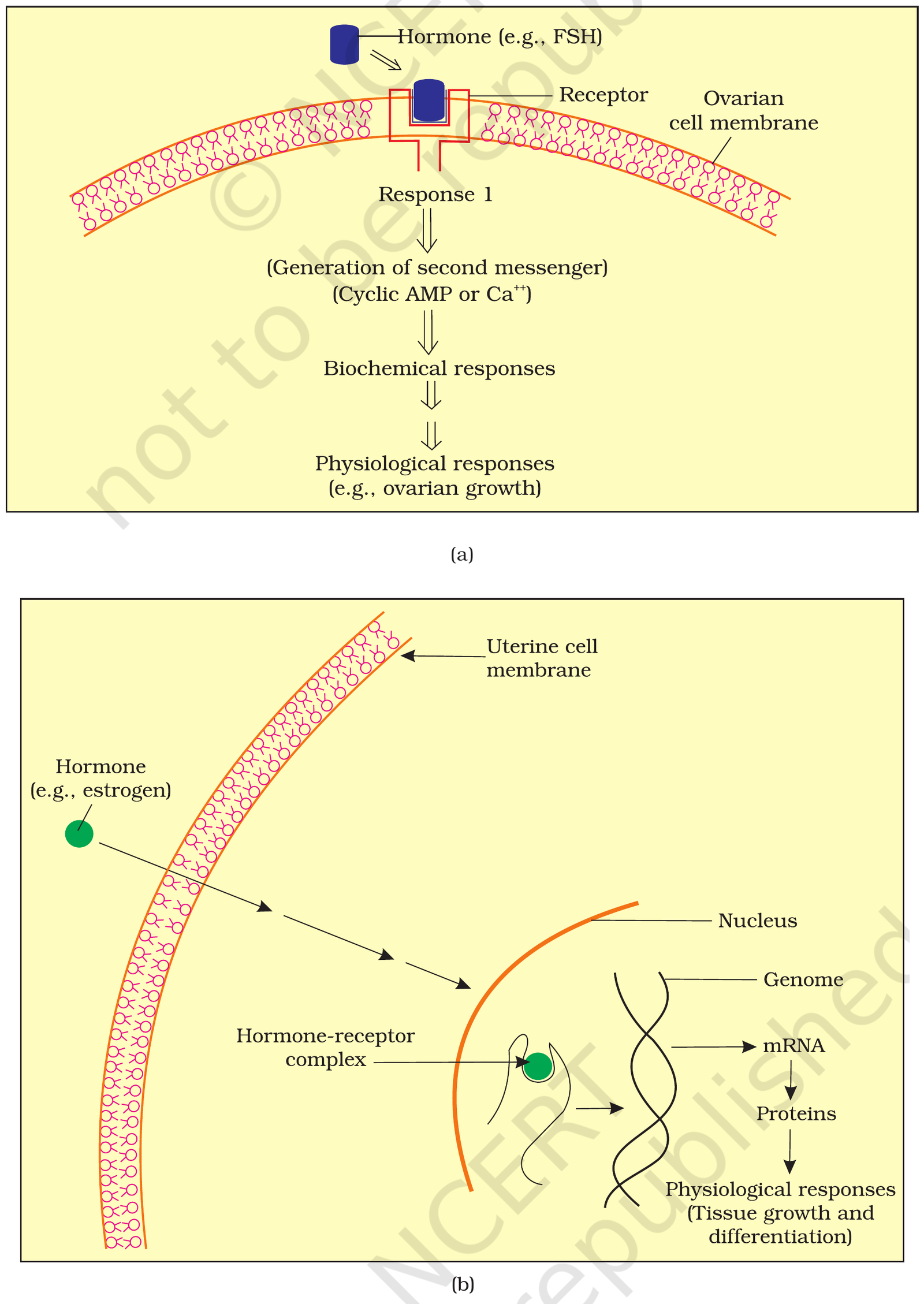
On the basis of their chemical nature, hormones can be divided into groups: (i) peptide, polypeptide, protein hormones (e.g., insulin, glucagon, pituitary hormones, hypothalamic hormones); (ii) steroids (e.g., cortisol, testosterone, estradiol and progesterone); (iii) iodothyronines (thyroid hormones); (iv) amino-acid derivatives (e.g., epinephrine and norepinephrine).
Hormones act on their target tissues by binding to specific receptors. The hormone-receptor complex then produces the response. There are two main modes of action, decided by the chemical nature of the hormone:
- Water-soluble hormones (peptides, proteins and amines, such as insulin, glucagon, ADH, adrenaline): they cannot cross the cell membrane, so they bind to membrane-bound receptors on the surface of the target cell. The hormone-receptor complex generates secondary messengers (for example cyclic AMP, $IP_3$ and $Ca^{2+}$), which regulate cellular metabolism. These hormones are fast acting but their effect does not last long.
- Lipid-soluble hormones (steroid hormones such as cortisol, aldosterone, testosterone, estrogen and progesterone, and thyroid hormones): they cross the cell membrane and bind to intracellular receptors, mostly in the nucleus. The hormone-receptor complex then regulates gene expression and protein synthesis. These hormones are slow acting but their effect lasts longer.
In this way, hormones regulate the metabolic activities of the target tissue: they can change the permeability of the cell membrane, activate enzymes, alter gene expression, and control the rates of metabolic reactions.
Practice1 question
Try it now. A wrong answer costs nothing here, try again until you get it.
Steroid hormones act through:
Steroid hormones (cortisol, aldosterone, testosterone, estrogen, progesterone) are lipid-soluble, so they enter the cell and bind intracellular receptors, then regulate gene expression and protein synthesis. Water-soluble hormones use membrane receptors and secondary messengers.
Table 1 - Endocrine glands, hormones and functions
| Gland | Hormone(s) | Main function |
|---|---|---|
| Hypothalamus | Releasing and inhibiting hormones; oxytocin and vasopressin synthesised here | Controls the pituitary; links neural and endocrine systems |
| Pituitary (anterior) | GH, PRL, TSH, ACTH, LH, FSH | Growth, milk formation, thyroid and adrenal control, reproduction |
| Pituitary (posterior) | Oxytocin, vasopressin (ADH) | Uterine contraction and milk ejection; water reabsorption |
| Pineal | Melatonin | 24-hour rhythm, sleep-wake cycle, body temperature |
| Thyroid | T4, T3, thyrocalcitonin (TCT) | BMR, metabolism, RBC formation; TCT lowers blood $Ca^{2+}$ |
| Parathyroid | Parathyroid hormone (PTH) | Raises blood $Ca^{2+}$ |
| Thymus | Thymosins | Differentiation of T-lymphocytes, cell-mediated immunity |
| Adrenal cortex | Cortisol, aldosterone | Carbohydrate metabolism; $Na^+$ and water balance |
| Adrenal medulla | Adrenaline, noradrenaline | Emergency response, fight or flight |
| Pancreas | Glucagon (alpha cells), insulin (beta cells) | Raises blood glucose; lowers blood glucose |
| Testis | Testosterone (androgens) | Male secondary sexual characters, spermatogenesis |
| Ovary | Estrogen, progesterone | Female secondary sexual characters, pregnancy |
| Heart | Atrial natriuretic factor (ANF) | Decreases blood pressure |
| Kidney | Erythropoietin | Stimulates red blood cell formation |
| Gastrointestinal tract | Gastrin, secretin, CCK, GIP | Gastric, pancreatic and gall bladder secretions |
Source: NCERT XI, Ch 19, 19.2.1-19.2.10, 19.3.
Table 2 - Pituitary hormones at a glance
| Hormone | Source lobe | Main action |
|---|---|---|
| Growth hormone (GH) | Pars distalis (anterior) | Body growth; over-secretion causes gigantism in children, acromegaly in adults; low secretion causes dwarfism |
| Prolactin (PRL) | Pars distalis (anterior) | Growth of mammary glands and formation of milk |
| Thyroid stimulating hormone (TSH) | Pars distalis (anterior) | Stimulates synthesis and secretion of thyroid hormones |
| Adrenocorticotrophic hormone (ACTH) | Pars distalis (anterior) | Stimulates synthesis and secretion of glucocorticoids from adrenal cortex |
| Luteinising hormone (LH) | Pars distalis (anterior) | Males: Leydig cells secrete androgens; females: ovulation and corpus luteum |
| Follicle stimulating hormone (FSH) | Pars distalis (anterior) | Males: spermatogenesis; females: growth of ovarian follicles |
| Melanocyte stimulating hormone (MSH) | Pars intermedia | Acts on melanocytes, regulates skin pigmentation |
| Oxytocin | Neurohypophysis (posterior), made in hypothalamus | Uterine contraction during childbirth; milk ejection |
| Vasopressin (ADH) | Neurohypophysis (posterior), made in hypothalamus | Water and electrolyte reabsorption in distal tubules; deficiency causes diabetes insipidus |
Source: NCERT XI, Ch 19, 19.2.2.
Table 3 - Disorders: too little or too much hormone
| Disorder | Cause | Key features |
|---|---|---|
| Dwarfism | Low GH secretion in children | Stunted growth |
| Gigantism | Over-secretion of GH in children | Abnormal height |
| Acromegaly | Over-secretion of GH in adults | Enlarged bones of face, hands and feet |
| Goitre | Iodine deficiency, hypothyroidism | Enlarged thyroid gland |
| Cretinism | Hypothyroidism in children | Stunted growth, mental retardation, low IQ, abnormal skin, deaf-mutism |
| Myxoedema | Hypothyroidism in adults | Low metabolic rate, weight gain, sluggishness |
| Exophthalmic goitre (Graves disease) | Hyperthyroidism | Enlarged thyroid, protruding eyeballs, increased BMR, weight loss |
| Diabetes insipidus | Deficiency of ADH (vasopressin) | Excessive loss of water in urine |
| Diabetes mellitus | Deficiency of insulin | High blood glucose, glucose in urine, ketone bodies |
Source: NCERT XI, Ch 19, 19.2.2, 19.2.4, 19.2.8.
Extra information (beyond NCERT): myxoedema is the adult form of hypothyroidism; NCERT 19.2.4 names cretinism and goitre only.
Table 4 - Adrenal cortex vs medulla
| Feature | Adrenal cortex (outer) | Adrenal medulla (inner) |
|---|---|---|
| Hormones | Cortisol (glucocorticoid), aldosterone (mineralocorticoid) | Adrenaline, noradrenaline |
| Chemical nature | Steroids (lipid-soluble) | Amino acid derivatives |
| Controlled by | ACTH from the anterior pituitary | Sympathetic nervous system (neural control) |
| Main actions | Carbohydrate metabolism; $Na^+$ and water reabsorption; blood pressure | Emergency response: alertness, heartbeat, respiration, blood glucose |
| Speed of action | Slow, long lasting | Fast, short lived |
| Deficiency effect | Acute weakness and fatigue, altered carbohydrate metabolism (Addison's disease) | NCERT names no deficiency disease of the medulla |
Source: NCERT XI, Ch 19, 19.2.7.
Extra information (beyond NCERT): adrenaline and noradrenaline are made from the amino acid tyrosine.
Ladder - Hormones that confuse
| Trap | Wrong | Right |
|---|---|---|
| Insulin vs glucagon | Both lower blood glucose | Insulin lowers blood glucose (hypoglycemic); glucagon raises it (hyperglycemic) |
| ADH vs ANF | Both retain water in the body | ADH retains water (reabsorption in distal tubules); ANF lowers blood pressure by dilating blood vessels |
| TCT vs PTH | Both raise blood calcium | TCT lowers blood $Ca^{2+}$; PTH raises blood $Ca^{2+}$ |
| Oxytocin vs vasopressin | Both are made in the pituitary | Both are made in the hypothalamus and only stored and released by the posterior pituitary; oxytocin acts on uterus and mammary glands, vasopressin on kidney tubules |
| Diabetes mellitus vs insipidus | Both are caused by insulin deficiency | Mellitus is insulin deficiency (glucose in urine); insipidus is ADH deficiency (water loss in urine) |
| GH in children vs adults | Over-secretion always causes gigantism | In children it causes gigantism; in adults the epiphyseal plates have closed, so it causes acromegaly |
| TSH vs T3/T4 | TSH is a thyroid hormone | TSH is a pituitary hormone that stimulates the thyroid; T3 and T4 are the thyroid hormones |
| Estrogen vs progesterone | Both support pregnancy | Estrogen develops female characters and ovarian follicles; progesterone supports pregnancy and milk storage |
Source: NCERT XI, Ch 19.
Extra information (beyond NCERT): ANF also inhibits $Na^+$ and water reabsorption in the renal tubules; the growth plates are called epiphyseal plates (GH row).
Trap Boxes
Oxytocin is made in the pituitary?
Wrong idea: Oxytocin and vasopressin are produced by the posterior pituitary gland.
Oxytocin and vasopressin are synthesised in the hypothalamus and transported to the posterior pituitary, which only stores and releases them. The pituitary makes neither of them.
NCERT XI, Ch 19, 19.2.1, 19.2.2
Diabetes mellitus and diabetes insipidus are the same?
Wrong idea: Both types of diabetes are caused by insulin deficiency.
Diabetes mellitus is insulin deficiency: blood glucose stays high and glucose is lost in urine. Diabetes insipidus is ADH deficiency: the kidney cannot reabsorb water, so large volumes of dilute urine are lost. Different hormone, different disease.
NCERT XI, Ch 19, 19.2.2, 19.2.8
TSH is a thyroid hormone?
Wrong idea: TSH is secreted by the thyroid gland along with T3 and T4.
TSH is a pituitary hormone that stimulates the thyroid gland to make T3 and T4. T3 and T4 are the thyroid hormones that regulate BMR and metabolism.
NCERT XI, Ch 19, 19.2.2, 19.2.4
Adrenaline comes from the adrenal cortex?
Wrong idea: Adrenaline is secreted by the adrenal cortex.
Adrenaline and noradrenaline come from the adrenal medulla (inner part), under neural control. The adrenal cortex (outer part) secretes cortisol and aldosterone.
NCERT XI, Ch 19, 19.2.7
Cretinism and myxoedema are hyperthyroidism?
Wrong idea: Cretinism and myxoedema are caused by excess thyroid hormone.
Both are hypothyroidism: cretinism is the childhood form (stunted growth, mental retardation, deaf-mutism). **Extra information (beyond NCERT):** myxoedema is the adult form. Hyperthyroidism causes exophthalmic goitre instead.
NCERT XI, Ch 19, 19.2.4
Chapter test
5 NEET PYQs. +4 for a correct answer, -1 for a wrong answer, exactly like NEET. Finish the test to earn a medal.
Q1: NEET (UG) 2021, Code M1, Q166
Erythropoietin hormone which stimulates R.B.C. formation is produced by :
Erythropoietin is secreted by the juxtaglomerular cells of the kidney and stimulates erythropoiesis, the formation of red blood cells.
Q2: NEET (UG) 2020, Code G5, Q9
Match the following columns and select the correct option.
(a) Pituitary gland (i) Grave's disease
(b) Thyroid gland (ii) Diabetes mellitus
(c) Adrenal gland (iii) Diabetes insipidus
(d) Pancreas (iv) Addison's disease
Pituitary deficiency of ADH causes diabetes insipidus; thyroid overactivity causes Graves (exophthalmic) disease; adrenal cortex underactivity causes Addison's disease; pancreatic beta-cell failure causes diabetes mellitus.
Q3: NEET (UG) 2019 (Odisha), Code G1, Q10
Which of the following hormones is responsible for both the milk ejection reflex and the foetal ejection reflex?
Oxytocin stimulates contraction of the smooth muscles of the uterus during childbirth (foetal ejection reflex) and milk ejection from the mammary glands (milk ejection reflex).
Q4: NEET (UG) 2018, Code AA, Q140
Which of the following is an amino acid derived hormone?
Epinephrine (adrenaline) is an amino-acid derivative. Ecdysone is a steroid, and estriol and estradiol are steroid sex hormones. **Extra information (beyond NCERT):** epinephrine is made from the amino acid tyrosine.
Q5: NEET (UG) 2017, Code A, Q169
Hypersecretion of Growth Hormone in adults does not cause further increase in height, because:
Growth hormone acts on growing bones. In adults the growth plates have closed after adolescence, so the long bones cannot grow longer; only the bones of the face, hands and feet enlarge (acromegaly). **Extra information (beyond NCERT):** the growth plates are called epiphyseal plates.
Score: 0 · Answered 0 of 5
Flashcards
Tap a card to flip it over and see the answer. Tap it again to flip it back.
Which gland controls most other endocrine glands, and where is it located?
Tap to flipThe pituitary gland, located in the bony cavity called sella tursica and attached to the hypothalamus by a stalk. **Extra information (beyond NCERT):** it is often called the master gland.
Tap to flip backOxytocin and vasopressin: where are they made, and where are they released from?
Tap to flipThey are synthesised in the hypothalamus and transported to the posterior pituitary (neurohypophysis), which only stores and releases them.
Tap to flip backIodine is essential for the synthesis of which hormones?
Tap to flipThyroxine (T4) and triiodothyronine (T3). Iodine deficiency leads to hypothyroidism and enlargement of the thyroid gland (goitre).
Tap to flip backPut the reproductive hormone axis in order: hypothalamus, pituitary, gonads.
Tap to flipHypothalamus releases GnRH, which stimulates the anterior pituitary to release LH and FSH, which act on the gonads to secrete sex hormones.
Tap to flip backWhat happens when vasopressin (ADH) is deficient?
Tap to flipDiabetes insipidus: excessive loss of water in urine because the distal tubules cannot reabsorb water without ADH.
Tap to flip backWhich pancreatic cells secrete insulin, and which secrete glucagon?
Tap to flipBeta cells secrete insulin (hypoglycemic); alpha cells secrete glucagon (hyperglycemic). Both are in the islets of Langerhans of the pancreas.
Tap to flip backName four steroid hormones and say how they act.
Tap to flipCortisol and aldosterone (adrenal cortex), testosterone (testis), estrogen and progesterone (ovary). They act through intracellular receptors and regulate gene expression.
Tap to flip backHow does insulin lower blood glucose?
Tap to flipInsulin stimulates glycogenesis (glucose to glycogen) in liver and muscle and enhances cellular glucose uptake, so blood glucose falls.
Tap to flip backCretinism and myxoedema: same cause or different? Which ages?
Tap to flipBoth are hypothyroidism: cretinism in children (stunted growth, mental retardation, low IQ, abnormal skin, deaf-mutism). **Extra information (beyond NCERT):** myxoedema is the adult form.
Tap to flip backWhich hormone lowers blood pressure, and which one stimulates red blood cell formation?
Tap to flipANF (atrial natriuretic factor) from the atrial wall of the heart decreases blood pressure. Erythropoietin from the juxtaglomerular cells of the kidney stimulates red blood cell formation.
Tap to flip back